

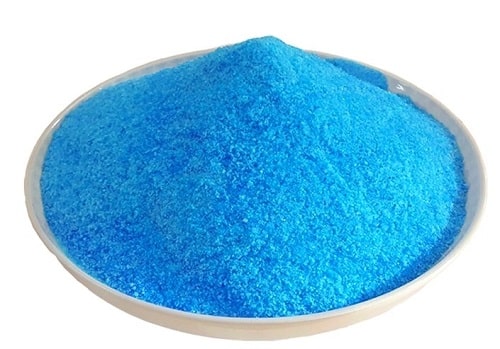
What is Copper Sulfate?
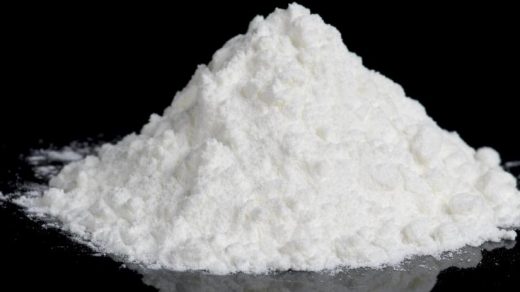
Copper sulfate, chemically written as CuSO₄, is a salt formed by combining copper and sulfuric acid. The most common form, copper sulfate pentahydrate (CuSO₄·5H₂O), is a blue crystalline solid. When dehydrated, it forms an anhydrous white powder (CuSO₄), which is hygroscopic and absorbs water readily.
Historical Background
Copper sulfate has been known for centuries and was historically called blue vitriol or Roman vitriol due to its vivid color. Ancient civilizations used it for medicinal and agricultural purposes, especially for treating diseases in plants and animals.
Formation in Nature
In natural settings, copper sulfate forms under specific environmental conditions:
- Weathering of Copper Ores:
- Copper-bearing minerals like chalcopyrite (CuFeS₂), bornite (Cu₅FeS₄), or malachite (Cu₂CO₃(OH)₂) react with oxygen and moisture over time.
- Sulfide ores undergo oxidation, producing sulfuric acid, which reacts with copper to form copper sulfate.
- Evaporation in Mines:
- In arid environments or old mines, water dissolves copper minerals, forming copper sulfate solutions that crystallize into chalcanthite.
- Chalcanthite is highly soluble in water, making it rare to find in wet climates.
- Volcanic Fumaroles:
- In volcanic areas, copper sulfate can form directly from volcanic gases rich in sulfur and copper compounds.
Methods to Create Copper Sulfate
1. Laboratory Method
- React copper metal with concentrated sulfuric acid under heat.
- Cu + 2H₂SO₄ → CuSO₄ + SO₂ + 2H₂O
2. Electrochemical Production
- Place copper electrodes in a bath of dilute sulfuric acid.
- When an electric current passes through, the copper anode dissolves into copper ions, forming copper sulfate in the solution.
3. Industrial Production
Industrially, copper sulfate is manufactured by:
- Heap Leaching: Copper ore piles are sprayed with sulfuric acid, dissolving copper into the leachate, which is then processed into copper sulfate.
- Roasting and Sulfation: Copper-containing materials are roasted in the presence of sulfuric acid fumes to directly produce copper sulfate crystals.
4. DIY Method
For small-scale production:
- Place copper wire in a solution of dilute sulfuric acid.
- Add hydrogen peroxide to speed up the reaction.
- Allow the solution to evaporate, leaving behind blue copper sulfate crystals.
Advanced Uses of Copper Sulfate
1. Water Treatment
- Controls algae blooms in reservoirs, ponds, and swimming pools.
- Used in flocculation, where impurities in water clump together for easier removal.
2. Batteries and Electronics
- Essential in producing electrolytes for copper-based batteries.
- Used in printed circuit boards for etching copper patterns.
3. Pigments and Dyes
- Provides a vivid blue color in ceramics, paints, and textiles.
- Mixed with other compounds to produce greens or purples.
4. Food and Agriculture
- Legally permitted in some regions as a trace mineral additive for livestock feed.
- Used in seed treatments to prevent fungal infections.
5. Mining Industry
- In the froth flotation process, copper sulfate activates sulfide minerals like zinc and lead to improve ore recovery rates.
6. Medical Applications
- Used in trace amounts for certain diagnostic tests, such as blood glucose measurement.
- Antiseptic properties make it useful for treating foot rot in livestock.
7. Explosives and Pyrotechnics
- Combines with other chemicals to create flame colors (blue and green) in fireworks.
- Used in some compositions of military-grade explosives.
Chemical Behavior and Properties
- Reactions with Alkalis:
- Forms copper hydroxide (Cu(OH)₂) when mixed with sodium hydroxide.
CuSO₄ + 2NaOH → Cu(OH)₂ + Na₂SO₄
- Dehydration:
- When heated, CuSO₄·5H₂O loses water in stages, becoming anhydrous white CuSO₄.
- Reactivity with Metals:
- Reacts with iron or zinc, displacing copper in the reaction.
CuSO₄ + Fe → FeSO₄ + Cu
Safety and Environmental Considerations
- Toxicity:
- Harmful to humans and animals if ingested in large quantities.
- Causes irritation to skin and eyes on contact.
- Environmental Risks:
- Excessive use in agriculture can lead to copper accumulation in soil, harming beneficial organisms.
- Runoff containing copper sulfate can affect aquatic life.
Safe Handling:
- Use gloves, goggles, and protective clothing during handling.
- Store in a cool, dry place away from organic materials or acids.
How to Identify Copper Sulfate
- Appearance: Blue crystals for the hydrated form or white powder for the anhydrous form.
- Tests:
- Add ammonia solution; a deep blue color indicates copper ions.
- Heat it; if it turns white, it’s hydrated copper sulfate.


Recent Comments