

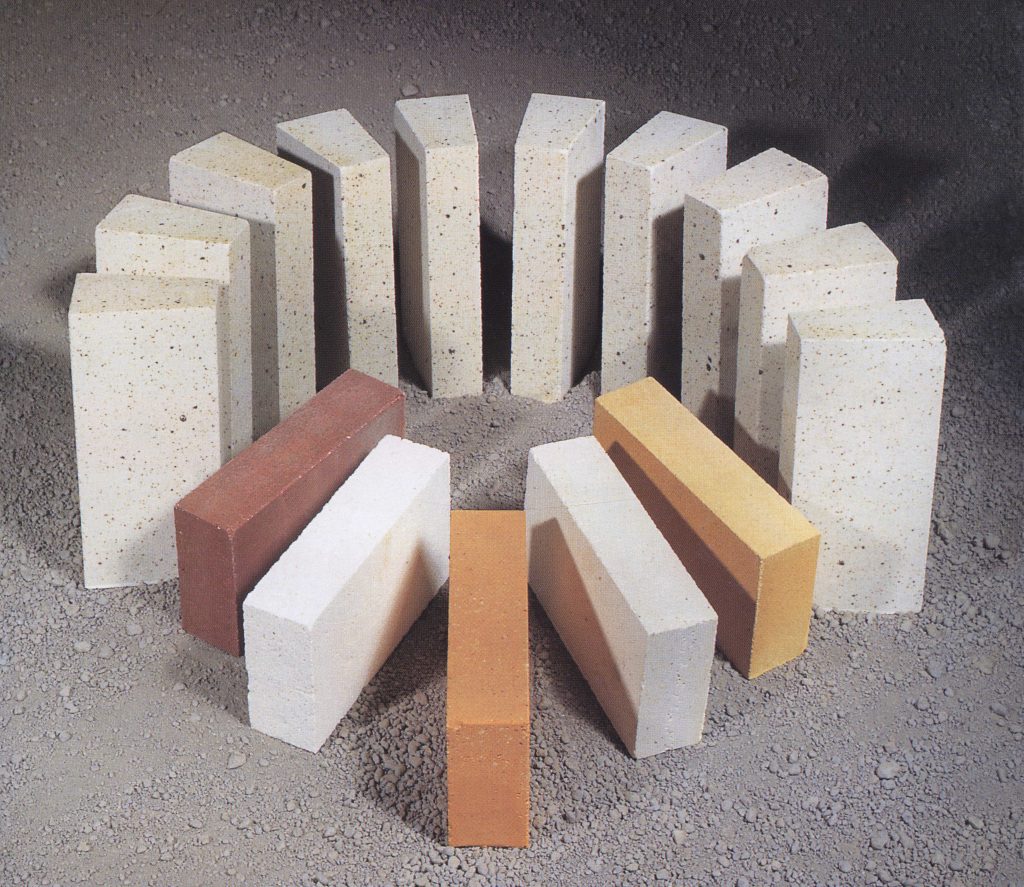
Various sources provide different definitions for refractories, each considering a specific aspect of these materials. In older definitions, refractory materials were considered to be those that can withstand temperatures above 1500 degrees Celsius. A more complete definition is that refractory materials are those used as building materials for furnaces and can maintain their physical properties at high temperatures and in furnace environments. A newer definition suggests that refractories are a type of construction element that falls under the category of non-metallic minerals. These materials are non-metallic and heat-resistant, capable of withstanding abrasive or corrosive factors at high temperatures. It is clear that the importance of a refractory material lies not only in its thermal stability but also in its physical and chemical stability against the destructive effects of the environment at high temperatures. (For instance, a refractory might have a melting point of around 2000 degrees Celsius but may not withstand abrasive or corrosive effects from materials or hot gases for an extended period.)
These materials and products must maintain complete volume stability under practical conditions, should not deform under load, and must remain stable with minimal loss in mechanical resistance under sudden temperature changes. They should also be resistant to the effects of molten materials and slags, as well as the dust from furnaces and the furnace charge. Refractory building materials, in this context, are industrial auxiliary materials that are consumed during their operational use.



Recent Comments